
Loading...
Serving Lake Havasu City, AZ and surrounding areas. (928) 392-1374
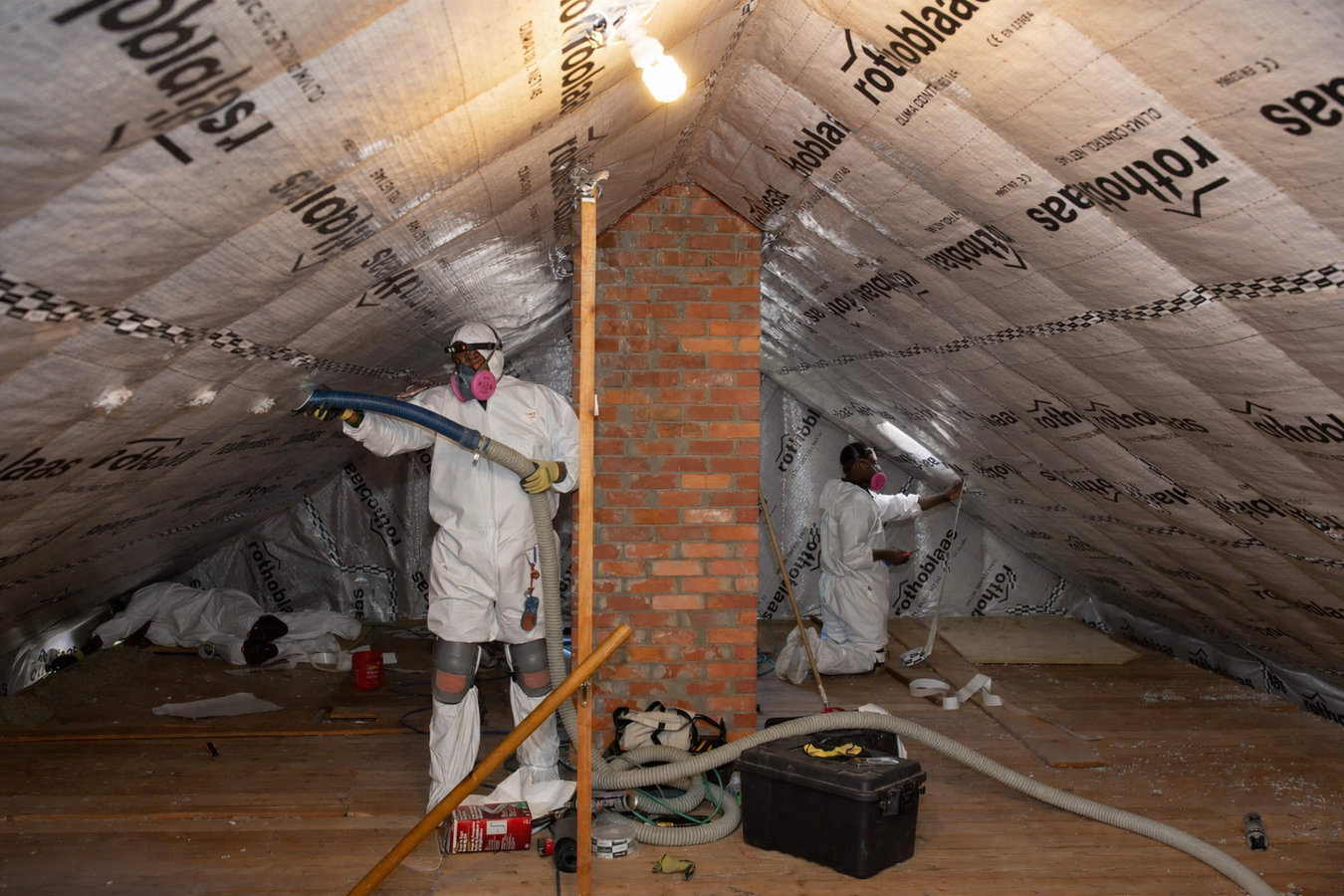
Your AC is fighting a 160-degree attic pushing hot air straight into your home through gaps insulation alone cannot stop. We find and close every one of them.
Attic air sealing in Lake Havasu City finds and plugs the gaps in your attic floor — around light fixtures, plumbing pipes, wiring chases, and wall top plates — that let 160-degree attic air pour directly into your living space. Most single-story homes are completed in one to two days using foam, caulk, and a blower door diagnostic that shows measurable before-and-after results.
Here is the part most homeowners do not know: insulation slows heat moving through solid surfaces, but it cannot stop air moving through gaps. If your attic floor has unsealed holes, hot desert air bypasses your insulation entirely and pours straight into your ceiling. Sealing first, then insulating, is the order that actually works — and in Lake Havasu City, where your AC runs hard for eight or more months a year, those gaps translate directly into money on every utility bill.
Attic air sealing pairs naturally with crawl space vapor barrier installation and with broader whole-home air sealing services for homeowners who want to address every leak point in one project.
If your air conditioner seems to run constantly from May through October without ever getting your home to a comfortable temperature, your attic is a likely culprit. In Lake Havasu City's extreme heat, an unsealed attic floor acts like a furnace vent above your ceiling — the AC cools the air, but hot attic air immediately replaces it through gaps. A well-sealed attic gives your system a fighting chance to keep up.
Stand in a room and notice whether the air near the ceiling feels significantly warmer than the air at waist height. This temperature layering is a classic sign that hot air is infiltrating from above rather than being held back. In a Lake Havasu City summer, this effect can make rooms with vaulted or cathedral ceilings nearly unusable during the hottest part of the day.
Lake Havasu City's desert environment produces a fine, powdery dust that finds its way into homes through every available gap. If you notice a thin layer of dust resettling on furniture and countertops within a day or two of cleaning, air is moving through your attic floor and carrying particles with it. This is both a comfort issue and an air quality issue — and sealing the attic is one of the most effective ways to address it.
If you stand below your attic access panel and feel a warm draft coming down, or if you can see light around the edges of the hatch, those are visible signs of air leakage. The attic hatch itself is one of the most commonly overlooked gaps in a home. In Lake Havasu City's summer heat, even a small gap there can make a noticeable difference in how comfortable the room below it feels.
We begin with a blower door test — a temporary fan unit fitted to your front door that depressurizes your home and makes every air leak visible and measurable. That diagnostic step is what separates a thorough job from guesswork. Once we know exactly where the gaps are, we seal them using the right material for each opening: spray foam around pipes and wiring penetrations, acoustical caulk along framing joints, and rigid foam board for larger attic bypass openings. Every recessed light, every plumbing stack, every wire chase — a thorough job addresses all of them.
After sealing, we run the blower door test again so you can see the measurable improvement in a real number. That documentation supports any APS rebate or federal tax credit application. We can also assess and quote crawl space vapor barrier work and broader whole-home air sealing services on the same visit so you can address the full envelope in one project if that makes sense for your budget.
Best for homes where the priority is finding every leak, not just the obvious ones — a diagnostic test measures the full leakage rate before and after so you can see the actual improvement.
Best for homes where specific problem areas have already been identified — focuses foam and caulk on known penetrations like recessed lights, plumbing stacks, and electrical chases.
Best for homes with a notable draft near the attic access point — addresses the hatch, weatherstripping, and the perimeter where interior wall top plates meet the attic floor.
Best for homes that need both services — sealing and adding new insulation together in one visit delivers more improvement per dollar than either step done separately.
A large share of Lake Havasu City's residential neighborhoods were built during the city's rapid growth period from the 1970s through the 1990s. Homes from that era were built before modern energy codes required tight construction, which means they typically have far more air leakage than newer homes. The gaps that were left open around plumbing, electrical, and HVAC penetrations during original construction have often been sitting open for thirty or forty years. Lake Havasu City's extreme thermal cycling — from 60-degree winter nights to 115-degree summer days — also causes framing to expand and contract over decades, widening gaps that may have been small when the home was new. The combination of original construction looseness and decades of thermal stress means older homes here respond dramatically well to air sealing.
We serve all of the greater Lake Havasu City area, including communities like Bullhead City, AZ and Fort Mohave, AZ, where the same desert climate conditions and 1970s-1990s construction era apply. Both Arizona Public Service and the federal home energy efficiency tax credit program may offset a meaningful portion of your project cost — ask us about current programs before you schedule.
We will ask a few basic questions: the size of your home, whether you have existing insulation, and whether you have noticed specific comfort problems. You will hear back within one business day and schedule a time for an in-person assessment.
A technician visits your home, inspects the attic in person, checks existing insulation, and runs a blower door test to measure exactly how leaky your attic floor is. You receive a written quote with scope, materials, and total cost — not a ballpark.
You do not need to vacate your home. The technician works in the attic, sealing every gap they find using foam, caulk, or rigid foam board depending on the opening type. A thorough job on a typical single-story home takes most of a day.
After sealing, we run a second blower door test so you can see the measurable improvement. You receive documentation of the work — useful for utility rebate applications and future home sales.
No sales pressure. Written quote with full scope and cost. Response within one business day.
(928) 392-1374Every project starts with a free written estimate covering scope, materials, and total cost, so you can compare us against any other contractor. When the crew finishes, we document the completed air sealing so you have a clear record of exactly what was done.
We test before the work and again after so you see a real, measured number — not a contractor's word that the job was done right. The Building Performance Institute at bpi.org explains why before-and-after testing is the standard for quality air sealing work.
We work this market full-time and know the local housing stock — the 1970s-1990s ranch construction, the stucco-over-block exteriors, and the thermal cycling that widens gaps over decades. We are not a contractor coming in from out of town.
Every job includes written documentation of what was sealed and the measured improvement. When a buyer's inspector asks whether attic air sealing was done and properly permitted, you have the records to show them — that documentation is an asset when you sell.
Every point above comes back to accountability: you should be able to verify the work before, during, and after. In a market where air sealing is invisible once the insulation goes back down, that transparency is what separates a contractor you can trust from one you cannot.
The U.S. Department of Energy air sealing guide explains where homes lose the most air and how sealing compares to insulation alone. The Building Performance Institute sets the training and testing standards for contractors who do this work properly. For rebates and tax credits, ENERGY STAR federal tax credit guidance covers current eligibility rules for home energy improvements.
Seal the other major entry point for desert heat and monsoon moisture — the ground beneath your crawl space floor — with a properly installed vapor barrier.
Learn moreExtend the sealing work beyond the attic floor to every zone in your home — walls, crawl spaces, and mechanical penetrations — for a whole-home air barrier.
Learn moreFall and early spring slots fill fast. Call today or submit a request and we will have a written quote to you within one business day.