Loading...
Serving Lake Havasu City, AZ and surrounding areas. (928) 392-1374
Ground moisture creeps into Lake Havasu City homes through crawl spaces, slabs, and walls - quietly damaging floors, framing, and insulation for years before you notice. We stop it with properly sealed vapor barriers built to last.
Vapor barrier installation in Lake Havasu City places sealed plastic sheeting in crawl spaces, under slabs, or in wall cavities to block moisture from moving into your home - most standard jobs are finished in a single day and a properly installed barrier lasts 20 or more years.
The answer to the desert question is geography. Lake Havasu City sits on the Colorado River, and the ground in lower-elevation neighborhoods near the water holds more moisture than the surrounding desert suggests. Add in the extreme heat that drives temperature differences between your cool interior and the hot soil beneath your home - and those differences pull moisture upward through bare ground, concrete slabs, and unprotected wall bases. Homes built during the city's rapid expansion in the 1970s and 1980s often used construction practices that did not include vapor barriers, or used thin material that has since cracked and deteriorated in the desert heat. Many Lake Havasu City homeowners find out about this problem only when floors start to feel soft, a persistent smell develops, or a home inspector flags it during a sale. The U.S. Department of Energy's moisture control guidance identifies crawl space and under-slab moisture as a primary driver of indoor air quality and structural problems in homes - a problem that applies in desert climates just as much as wet ones.
Vapor barrier installation works closely with retrofit insulation projects - moisture control and thermal performance address two sides of the same problem in older homes. For homes specifically focused on the crawl space, our crawl space vapor barrier service goes deeper into that specific scope.
A persistent earthy or musty smell - especially in rooms near the floor or in closets along exterior walls - often means moisture is entering from below. In Lake Havasu City, this can happen even in dry months because ground moisture near the river does not follow the same seasonal pattern as rainfall. If the smell gets worse in summer when your AC runs constantly, that is a strong signal.
Wood subfloors that have absorbed moisture over time start to feel spongy underfoot - like there is a little give where there should not be. This is especially common in older Lake Havasu City homes built in the 1970s and 1980s that never had a barrier installed. If you notice this in a bathroom, laundry room, or near an exterior wall, it is worth having someone look underneath.
That white powdery buildup - sometimes called efflorescence - is a sign that water is moving up through your concrete and evaporating at the surface. It is particularly common in Lake Havasu City homes with slab foundations, especially in garages or utility rooms. It does not always mean serious damage yet, but it does mean moisture is actively moving through your floor.
When insulation under your floor or in your walls gets damp, it stops working as well as it should. In a city where summer cooling costs are already high, losing even a fraction of your insulation's effectiveness can add up fast on your electric bill. If your bills have risen and you have not changed your habits or thermostat settings, moisture-damaged insulation could be part of the reason.
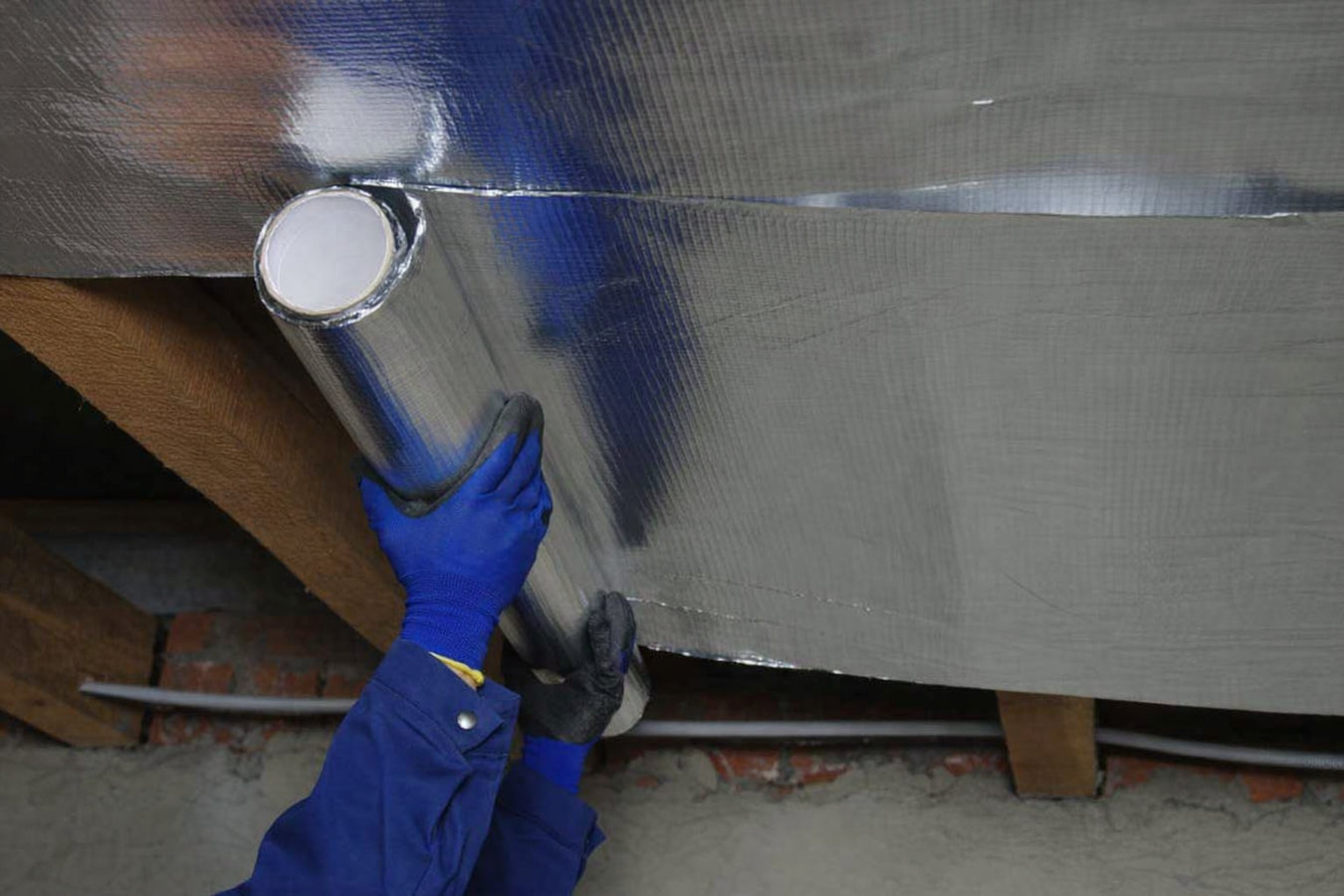
We start with an on-site assessment that identifies where moisture is entering and what type of installation makes sense for your home. The right location, material thickness, and sealing method depends on how your home is built. For crawl spaces, we lay the barrier across the ground, overlap every seam by several inches, tape them flat, and secure the edges to the foundation walls and around any posts or pipes. For slab foundations, we can assess whether a surface-applied sealant or a barrier installed during a renovation is the right path. We use 10-mil to 20-mil polyethylene sheeting for crawl spaces - the heavier-duty range the Department of Energy recommends for spaces with any foot traffic - and we explain our material choice and why it matters before work begins.
For homes tackling multiple improvements, vapor barrier installation pairs well with retrofit insulation - addressing moisture first protects any new insulation investment. Homeowners focused specifically on the crawl space can also see our dedicated crawl space vapor barrier service, which goes into detail on crawl space-specific installation and encapsulation options.
Best for homes with a dirt-floor crawl space and no existing barrier - or where old thin sheeting has deteriorated - laying sealed heavy-duty sheeting across the entire floor.
Best for slab-on-grade homes showing efflorescence, flooring adhesive failures, or persistent floor-level moisture - identifying the source and recommending the right fix for your situation.
Best for 1970s-1980s Lake Havasu City homes where original thin sheeting has cracked or degraded over decades of extreme heat cycling - removing old material and installing a proper heavy-duty replacement.
Best for homes that need both moisture control and thermal improvement at once - addressing the barrier first protects the new insulation and delivers better performance per dollar than either step alone.
Two things make vapor barrier work more pressing here than in most desert markets. First, a large share of Lake Havasu City's homes are slab-on-grade construction - and slabs are porous. Ground moisture migrates upward through concrete even when the surface looks dry, especially in neighborhoods with a higher water table near the Colorado River. Homeowners with tile or hardwood floors sometimes notice efflorescence or flooring adhesive failures that trace back to moisture coming up through the slab. Second, Lake Havasu City regularly sees summer temperatures above 115 degrees, which drives temperature differences between the cool air-conditioned interior and the hot ground below - and those differences actively pull moisture upward through every pathway it can find. The USGS Arizona Water Science Center documents the elevated groundwater conditions that affect low-lying parts of the Colorado River corridor.
We serve the full Lake Havasu City area and surrounding communities, including Parker, AZ and Bullhead City, AZ, where the same Colorado River geography and 1970s-1980s construction era create similar moisture challenges. Mohave County and City of Lake Havasu City building department oversight applies to vapor barrier and insulation work here, and your contractor should know what permit requirements apply to your specific project before starting.
We ask a few basic questions - the age of your home, whether you have a crawl space or a slab, and what is prompting you to call. Most contractors in the Lake Havasu City area can schedule an on-site visit within a few days. You will hear back within one business day.
The contractor inspects the area where the barrier needs to go - looking at the size of the space, whether there is existing material to remove, how easy it is to access, and whether there are signs of existing moisture damage. This visit is free and is your chance to ask questions.
After the assessment you receive a written quote that spells out exactly what is included - area covered, material thickness, whether old material removal is in scope, and the total price. A trustworthy contractor will not pressure you to sign on the spot. Take time to compare a couple of quotes if you want to.
The crew lays the barrier, overlaps and seals every seam, fastens the edges to walls and around posts or pipes. A typical Lake Havasu City home takes one full day. Before the crew leaves, ask them to walk you through the finished work so you can see exactly what was done and check the seams yourself.
No obligation. Written quote with material specs and full scope. Response within one business day.
(928) 392-1374Every vapor barrier job starts with a free written estimate covering scope, material thickness, and total cost. You see the full number before signing anything and can compare it against any other bid. The figure is in writing, so there are no surprises once the crew arrives.
A big reason quotes vary is material thickness. We use 10-mil to 20-mil heavy-duty sheeting for crawl spaces and explain exactly what we are installing and why. Contractors quoting dramatically lower prices are often using thinner material that degrades faster in the desert heat cycles this area sees every year.
We work this market full-time and know the local housing stock - the slab-on-grade construction common here, the 1970s homes along the original townsite with no ground cover, and the Colorado River neighborhoods where the water table makes moisture protection genuinely essential.
Home inspectors in the Lake Havasu City area look closely at crawl spaces and slab conditions. A missing or deteriorated barrier is a common inspection finding that can complicate a sale. We provide written records of what was installed so you have documentation when it matters most.
A well-installed vapor barrier is something you can check yourself - the seams are sealed, the edges are fastened to the walls, and there are no gaps. We walk you through it before we leave because we want you to see exactly what you paid for.
Upgrading insulation in an existing home after the vapor barrier is in place - addressing moisture first protects the new insulation and delivers better energy performance per dollar.
Learn moreA deeper look at crawl space-specific vapor barrier installation, including encapsulation options for homes near the Colorado River waterfront with elevated moisture levels.
Learn moreSchedule your free assessment this week - Lake Havasu City summers drive moisture upward through every unprotected surface, and the cost of a barrier now is far less than repairing rotted framing or replacing damaged flooring later.