Loading...
Serving Lake Havasu City, AZ and surrounding areas. (928) 392-1374
Lake Havasu City commercial buildings run air conditioning for nine months a year - and older buildings leak that cooled air through roofs and walls built to weaker standards. We fix the building envelope so your equipment can keep up.
Commercial insulation in Lake Havasu City means installing spray foam, blown-in material, or rigid board in your building's roof, walls, and attic spaces to stop heat from entering - most standard commercial jobs run one to three days and the impact on cooling costs shows up in the first full billing cycle.
Lake Havasu City sees summer temperatures above 115 degrees, and commercial buildings here run air conditioning for the better part of nine months. If your building was constructed in the 1980s or 1990s - which covers a significant portion of the commercial stock in Mohave County - it was built to energy standards that allowed far less insulation than what makes sense today. Insulation from that era also settles and compresses over time, meaning the thermal protection it once offered has likely declined. The result is an HVAC system that runs almost constantly, wears out faster than it should, and drives energy costs that eat into your operating margin every month. According to the U.S. Department of Energy, proper insulation can cut heating and cooling costs by 15 percent or more in commercial buildings - and in a climate as extreme as Lake Havasu City, the savings potential is even higher.
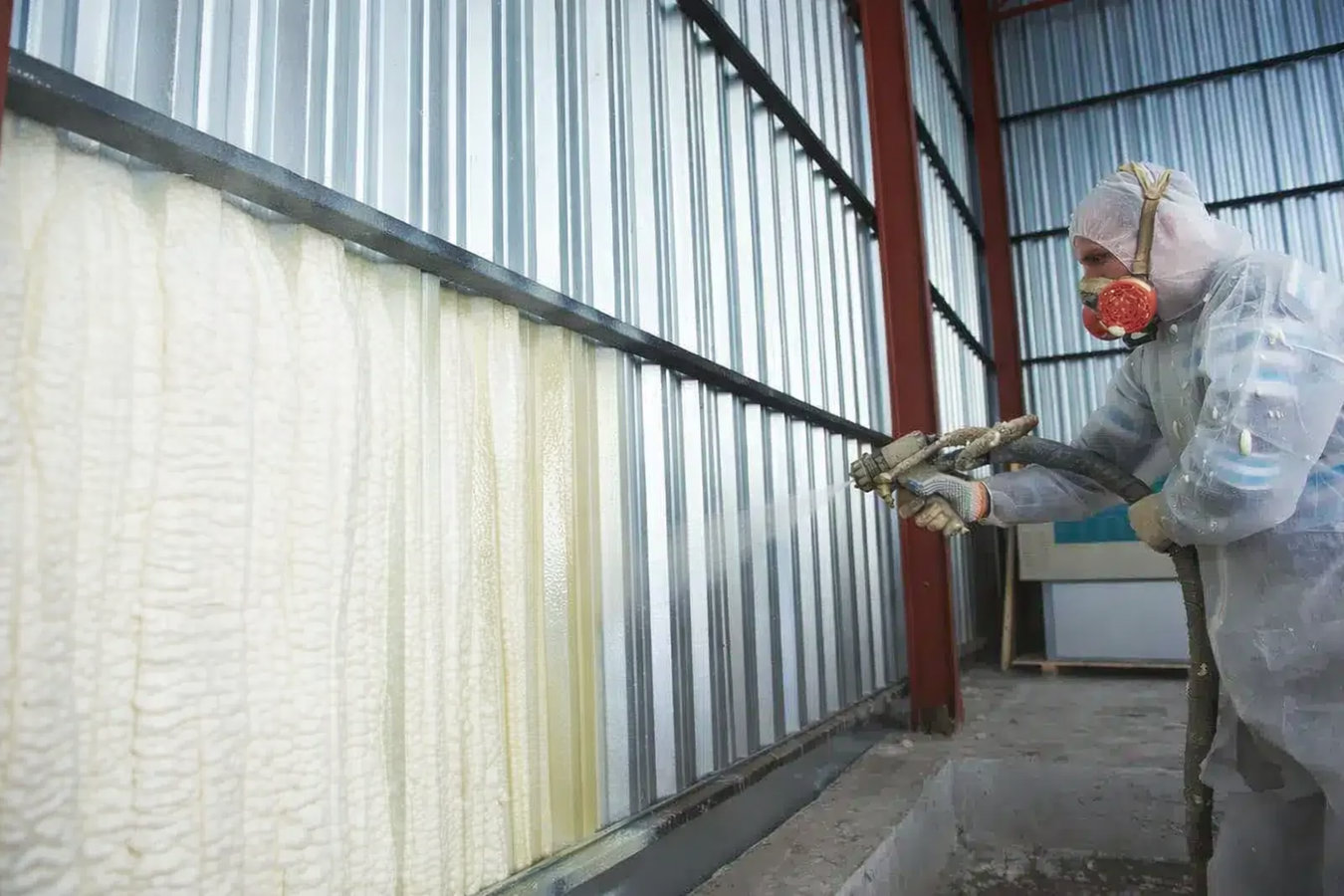
Commercial insulation often works alongside spray foam insulation - which is particularly well-suited for commercial roof decks and hard-to-reach cavities in this climate - and blown-in insulation for attic spaces and wall cavities where material needs to fill around obstructions.
If your electricity costs have been rising year over year and your operations have not changed, failing insulation is one of the most common culprits. In Lake Havasu City's extreme heat, even a modest drop in insulation performance forces your air conditioning to run longer and harder. A noticeable jump in your summer utility bills - especially compared to two or three years ago - is worth investigating.
Walk through your building on a hot afternoon and pay attention to rooms near exterior walls or directly under the roof. If those spaces feel significantly warmer than the rest of the building - even with the AC running - heat is getting in somewhere it should not. In Lake Havasu City's summer climate, this is not just a comfort issue - it puts real strain on your HVAC equipment.
Many commercial buildings in Lake Havasu City were constructed in the 1980s and 1990s under older building standards. Insulation from that era may have settled, degraded, or was simply thinner than what is recommended today. If you have owned or leased the building for years without ever having someone look at the insulation, you may be paying for that oversight every month on your energy bill.
An air conditioning system that rarely cycles off is a sign it is struggling to keep up with heat gain. In a well-insulated building, the AC reaches the set temperature and rests. If yours runs nearly nonstop from May through September, the building envelope - walls, roof, and windows - may not be doing its job of keeping heat out.
Commercial buildings in Lake Havasu City deal with insulation challenges that are different in scale from residential work, but the fundamentals are the same: find where heat is entering, choose the right material for that location and application, and install it correctly so it performs at its rated level. We start every commercial project with an on-site assessment that identifies the highest-priority areas - typically the roof deck and attic space, where solar heat loads are most intense - and gives you a written estimate that spells out the full scope before you commit to anything. For roof decks and hard-to-reach areas, we use spray foam because it seals and insulates in one application. For attic spaces and wall cavities, blown-in material fills around ducts, structural elements, and obstructions that make cut-and-fit panels impractical. ENERGY STAR for commercial buildings provides the benchmarking framework we use to evaluate how your building is performing and where the most improvement per dollar is available.
For buildings that need spray foam as the primary insulation method, our dedicated spray foam insulation service covers the specifics of that application. Buildings with large attic or ceiling spaces that need to be brought up to current standards are well-suited for our blown-in insulation service, which goes into detail on material selection and depth requirements for desert climates.
Best for flat-roofed commercial buildings - common in Lake Havasu City - where solar heat loads are highest and insulating the roof assembly delivers the fastest reduction in cooling demand.
Best for older commercial buildings with uninsulated or under-insulated exterior walls - blown-in material fills existing cavities through small access points without requiring major interior demolition.
Best for buildings with complex rooflines, mechanical penetrations, or areas where rigid board or blown-in material cannot achieve full coverage - spray foam expands to fill every gap.
Best for building owners who want a complete picture before committing to any single scope - identifying all areas of heat gain and prioritizing them by return on investment.
Two structural realities define commercial insulation work in Lake Havasu City. First, a large share of commercial buildings here use flat or low-slope roofs - common in desert construction - which absorb enormous amounts of solar heat during the day and transfer it directly into the building below. Insulating the roof deck or attic space is often the single highest-impact upgrade a commercial property owner can make in this climate, and it is the first place we look. Second, the city was incorporated in 1978, and much of its commercial stock dates from the 1980s and 1990s, when insulation requirements were substantially weaker than the ASHRAE 90.1 energy standard now sets for commercial buildings. A building that has never been updated is almost certainly underperforming, and the gap between what was installed and what is needed today shows up directly on the monthly utility bill. Arizona requires permits for commercial insulation work that affects the building envelope - your contractor handles that paperwork, but you should confirm upfront that permits will be pulled before work begins.
We serve commercial properties throughout Lake Havasu City and the surrounding region, including Bullhead City, AZ and Kingman, AZ, where similar building vintages and desert climate conditions create the same set of commercial insulation challenges. Contractor availability in Lake Havasu City tightens from October through March when seasonal residents return and renovation projects peak - scheduling before that window often means faster timelines and more competitive pricing.
We ask a few basics - the size of your building, what type of business you run, and what is prompting the call. You do not need to know anything technical. You will hear back within one business day and we schedule an on-site visit at your convenience.
We visit your building, look at existing insulation, measure the areas that need work, and assess how accessible everything is. This visit typically takes one to two hours. Afterward, you receive a written estimate that spells out scope, materials, and total cost - before you commit to anything.
For most commercial insulation work in Lake Havasu City, a building permit is required before work begins. We handle the permit application - you should not have to navigate the permit office yourself. Once approved, we schedule a start date that works around your business operations.
The crew works in attic spaces, wall cavities, or mechanical rooms - areas that typically do not affect your daily operations. When the work is complete, we walk through the finished areas with you, show you what was installed and where, and give you documentation of the work for your records.
No commitment. Written quote with full scope before you decide. Response within one business day.
(928) 392-1374Every commercial project starts with a free written estimate that details the scope, materials, and total cost. You can compare it against any other contractor and know you are looking at the same work. We put the figure in writing up front so there are no surprises once the crew is on site.
Commercial insulation in Lake Havasu City requires permits and inspections. We pull every permit before work begins and do not ask you to look the other way. Permitted work gives you documented proof that the job passed inspection - which matters for insurance claims, lease renewals, and building sales.
The flat and low-slope roofs common to Lake Havasu City commercial buildings are where the most heat enters - and where poor installation causes the most ongoing damage. We have insulated dozens of commercial roof assemblies in this climate and know what materials and methods hold up under sustained 115-degree heat.
Most commercial insulation work happens in attic spaces, roof areas, and mechanical rooms that have no connection to your daily operations. In the majority of projects we complete, the business stays open and customers and employees never notice anything. We plan around your schedule, not ours.
Every commercial project ends with a walkthrough and written documentation of what was installed - so you have proof the work was done correctly, the permit passed inspection, and you can file any applicable utility rebate or insurance paperwork without guessing.
Spray foam for commercial roof decks, hard-to-reach cavities, and buildings where gaps need to be sealed and insulated in one application.
Learn moreBlown-in material for commercial attic spaces and wall cavities - filling around ducts and structural elements without demolition.
Learn moreLake Havasu City summers do not wait - lock in your project date before peak heat arrives and contractor schedules fill up.