
Loading...
Serving Lake Havasu City, AZ and surrounding areas. (928) 392-1374
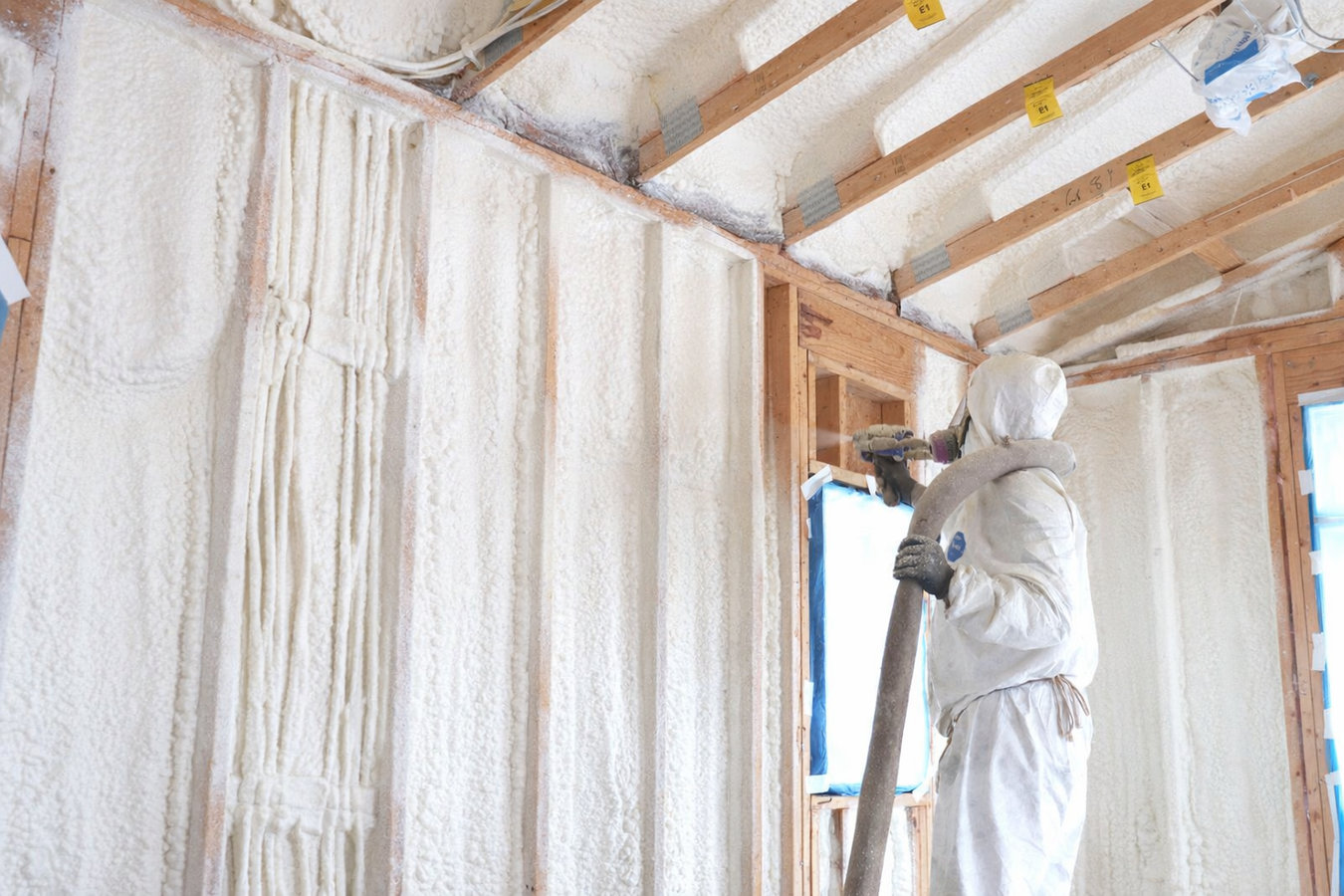
One product that insulates and seals air leaks in the same pass. For Lake Havasu City homes fighting 115-degree summers, closed-cell foam is the strongest tool available.
Closed-cell foam insulation in Lake Havasu City is sprayed onto surfaces as a liquid and expands into a dense, rigid layer that insulates and seals air leaks at the same time - most residential attic jobs are completed in one to two days, with a 24-hour window before the home is reoccupied. It has one of the highest insulating values per inch of any material available to homeowners today, which means a thinner layer does more work than a thicker layer of traditional fiberglass.
In Lake Havasu City, where attic temperatures can exceed 150 degrees Fahrenheit in summer, the combination of insulation and air sealing in one product is particularly valuable. Traditional fiberglass batts slow heat transfer, but they do nothing about conditioned air escaping through gaps around pipes, wires, and framing. Closed-cell foam addresses both at once.
For homeowners deciding between foam types, it is worth comparing open-cell foam insulation as well - each has different performance characteristics and fits different applications within the same home.
If your cooling costs climb sharply from May through September and your air conditioner runs almost nonstop even at night, your home is likely losing conditioned air faster than your system can replace it. In Lake Havasu City's climate, that pattern almost always points to an insulation or air-sealing problem. Closed-cell foam addresses both at the same time.
If a bedroom, bonus room, or garage-adjacent space stays uncomfortably warm no matter how long the AC runs, that room is probably losing cool air through the ceiling, walls, or floor. This is especially common in Lake Havasu City homes built in the 1970s and 1980s, where insulation was often installed unevenly or skipped entirely in problem areas.
Hold your hand near an outlet on an exterior wall on a hot afternoon. If you feel warmth, outside air is moving through gaps in your wall insulation. This is a sign of air leaks that standard insulation alone never addressed - closed-cell foam seals those gaps at the same time it insulates.
Homes built during Lake Havasu City's growth decades of the 1970s and 1980s were constructed under much older building standards. If you have never had an energy audit or insulation inspection, there is a reasonable chance your attic and walls are performing well below what is needed to handle 115-degree summers comfortably and efficiently.
We install closed-cell foam in the areas where it makes the biggest difference in Lake Havasu City homes - attic roof decks, crawl spaces, garage ceilings, and exterior-facing wall cavities during renovations. Applied directly to the underside of a roof deck, it turns the attic into what building scientists call a conditioned space, which means your HVAC equipment and ductwork are no longer sitting in air that is 150 degrees Fahrenheit. That change alone can reduce the strain on your cooling system significantly. We also use spray foam insulation across a range of applications where both insulation and air sealing are needed in the same location.
Every job starts with a walkthrough to assess what is already in place and determine the right thickness for the area being insulated. Because foam reacts to surface temperature during application, we schedule summer jobs for early morning hours - before the attic or work area reaches peak heat. That timing detail matters for cure quality, and experienced local contractors plan for it.
Foam sprayed directly to the underside of the roof deck creates a conditioned attic space - the most effective approach for homes where HVAC equipment or ducts are in the attic.
For homes with crawl spaces, closed-cell foam on the walls and rim joists stops both heat and air movement from the ground level - a high-performance option for hot desert climates.
Best for attached garages that share a wall or ceiling with living space - foam insulation keeps the heat generated in a sun-exposed garage from moving into your home.
When walls are opened during a remodel, closed-cell foam provides maximum insulation value per inch in the cavity - the right choice for exterior walls in high-heat climates.
A large share of Lake Havasu City's residential neighborhoods were built during the city's rapid growth in the 1970s and 1980s, when insulation standards were far less demanding than they are today. Many of those homes were built with thin fiberglass batts that have since settled, compressed, or simply never performed at the level needed for sustained 115-degree heat. Closed-cell foam is one of the most direct ways to bring a home from those era standards up to something that actually handles modern desert summers - and because it does not settle or sag over time, it stays effective for the life of the home. Homeowners in nearby Bullhead City and Needles, CA face the same aging-stock problem and often find the same solution effective.
The Mojave Desert climate around Lake Havasu City is extremely dry, which is actually an advantage for closed-cell foam installation. Foam cures more predictably in low-humidity conditions, and moisture-related problems that affect insulation in humid climates are rarely a concern here. The bigger local factor is heat management during the job itself - the chemical reaction that creates the foam is sensitive to extreme surface temperatures, so experienced local contractors schedule summer jobs for early morning hours before the attic reaches peak heat. If a contractor wants to spray your attic at 2 p.m. in July without any discussion of timing, that is a detail worth asking about.
We will ask a few quick questions about your home - its age, the areas you want insulated, and whether any work has been done before. We reply within one business day and schedule an on-site visit. You do not need to know anything technical before that first call.
We walk the attic, crawl space, or other target areas to assess current conditions and measure the space. You get a written quote that shows the area being covered, the thickness being applied, and the total price - not just a single number. No pressure to decide on the spot.
Before installation, clear the work area of any stored items and plan to be out of the home - with pets - for at least 24 hours after the foam is applied. We will tell you exactly when it is safe to return. In summer, we schedule the spraying for early morning to ensure proper cure conditions.
Once the foam has cured, we walk the finished work with you so you can see the coverage before anything gets covered up. Every surface should show even, consistent foam with no thin spots or gaps. We handle cleanup before we leave - and if a permit inspection is required, we coordinate that too.
We will walk your attic or crawl space, explain exactly what we recommend and why, and give you a written quote before anyone starts spraying. No obligation, no pressure.
(928) 392-1374Every closed-cell job starts with a free written estimate that breaks out the thickness, area, and total cost. You can compare it against any other contractor and know you are looking at the same work. We stand behind the figure in writing and do not change it once the crew arrives.
Closed-cell foam requires the right surface temperature to cure properly. We schedule all summer attic jobs for early morning hours, before the work area reaches peak heat. Contractors who do not account for this detail risk uneven curing and reduced performance - we plan for it on every job.
We work throughout Lake Havasu City and the broader Mohave County area. Local experience matters for spray foam work because regional climate conditions - extreme heat, low humidity, early-morning temperature windows - are factors that out-of-area crews may not account for the same way.
Before we leave, we walk the completed job with you so you can see the foam coverage with your own eyes. Even thickness across the entire surface, no gaps, no areas skipped. The Spray Polyurethane Foam Alliance recommends verifying coverage before any covering material goes back up - we build that step into every project.
Closed-cell foam is one of the higher-cost insulation options, and homeowners deserve to know exactly what they are getting before they commit. The Spray Polyurethane Foam Alliance recommends working with contractors who provide written quotes with thickness and area breakdowns - we do that on every estimate. Ask for that breakdown from any contractor you are considering and compare the numbers side by side.
A softer, lower-cost spray foam option better suited for interior walls and soundproofing applications where vapor resistance is less critical.
Learn moreA broader look at spray foam applications across the whole home - from attic to crawl space - and how the right foam type varies by location.
Learn moreWe are booking attic and crawl space foam jobs now - call or submit a request today and we will get back to you within one business day.